
When it comes to multifamily EV charging, not all solutions are created equal. While new developments may be wired for high power charging stations, retrofits may need a lower power solution that works within the property’s existing electrical capacity.
Every site team tasked with implementing EV charging eventually runs into the same question: What’s the difference between a charging station and an EV outlet, and which solution is right for our property?
Compare the benefits of charging stations and outlets to find the right solution for your property’s needs.
Charging Stations vs. Outlets: The Basics
What Are EV Charging Stations?
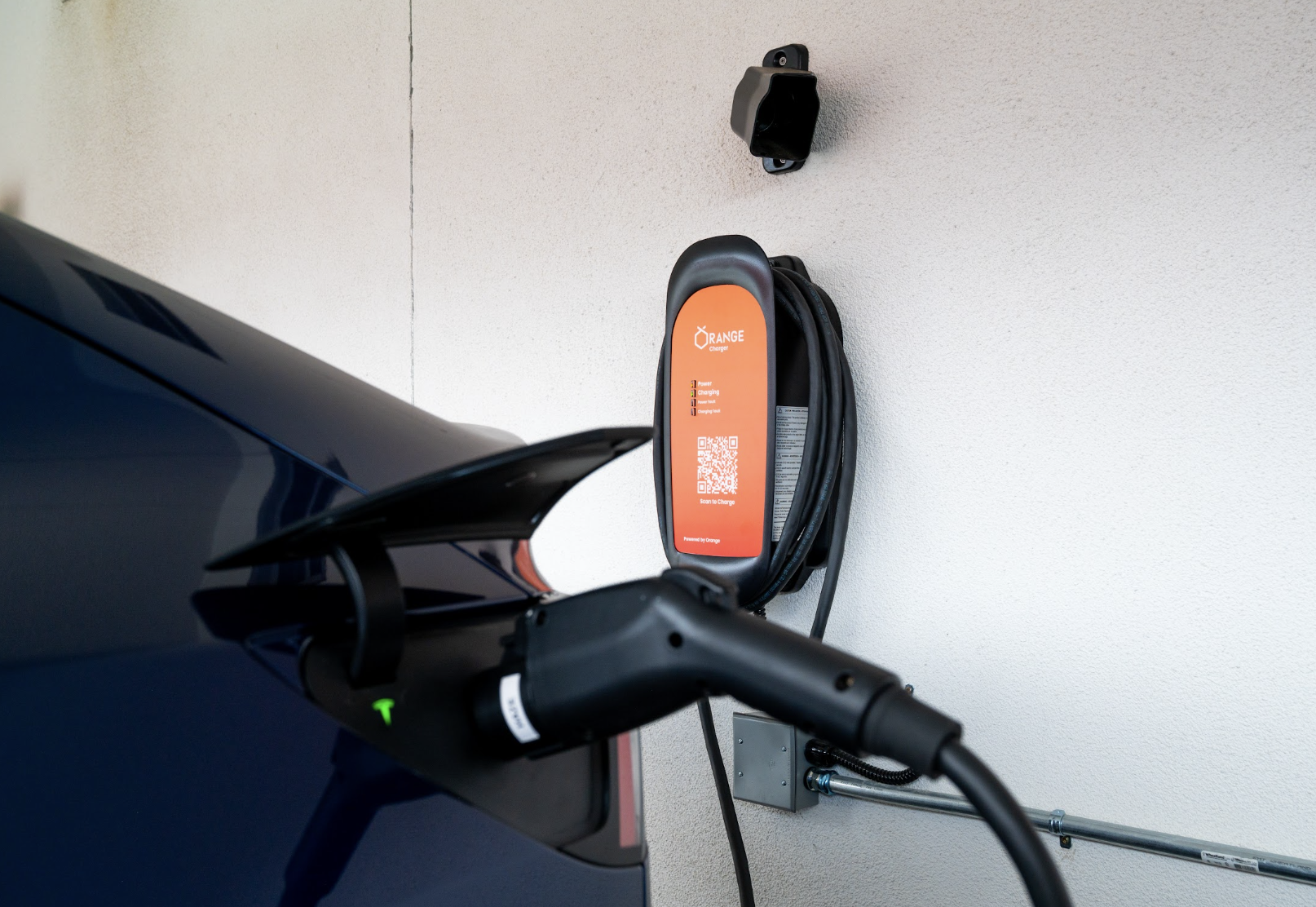
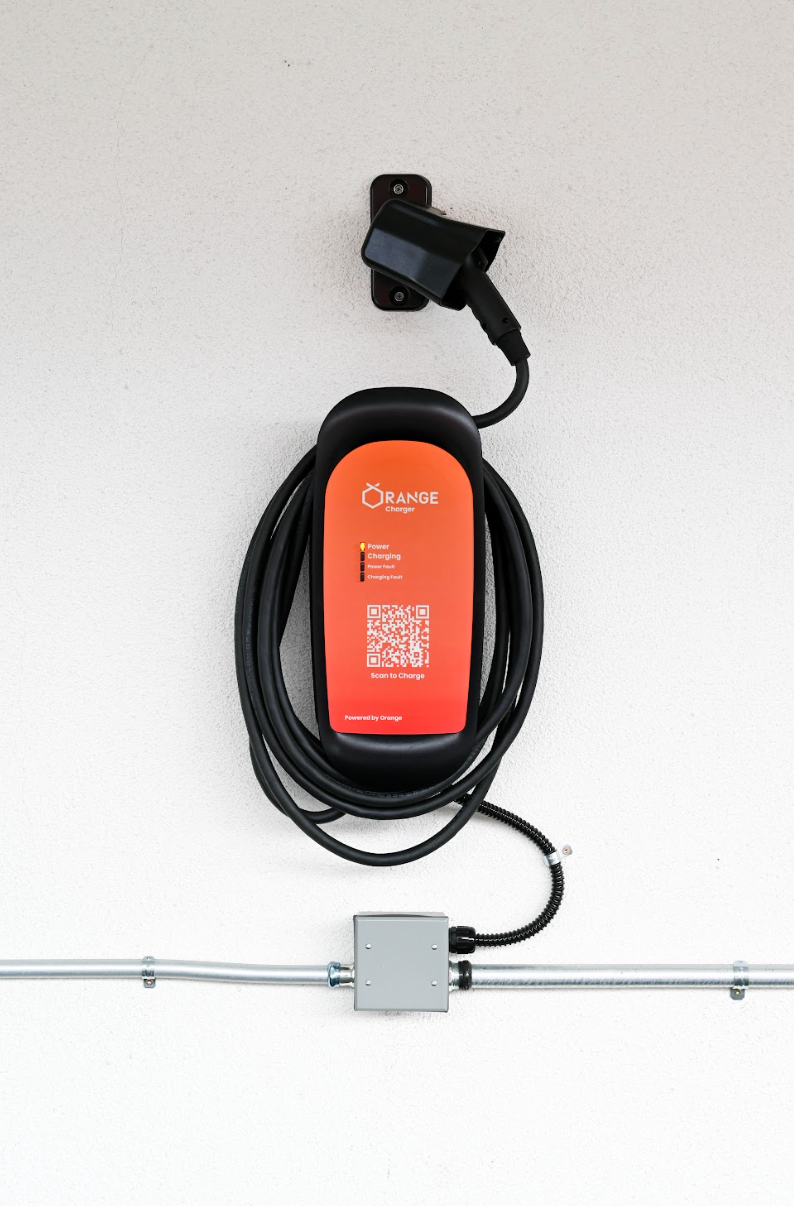
Traditional EV charging stations are what most people picture when they think of EV charging. A large, standalone unit with a cable that you plug into your car. They’re designed for shared use and are commonly found in parking garages, shopping centers, and some multifamily properties.
What Are EV Outlets?
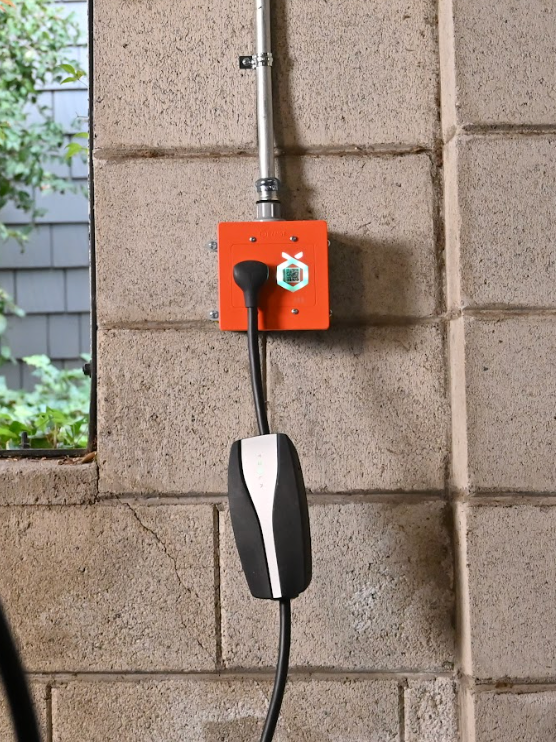
EV outlets are simpler. They’re metered, weather-rated outlets that let residents plug in using the portable cable that comes with most EVs. There’s no screen and less hardware, and they can be either wall or pedestal mounted.
Multifamily properties have unique needs when it comes to EV charging. Unlike single-family homes, there may be many drivers who need access to chargers, often at the same time.
Site teams who are looking to provide EV charging as an amenity to their residents should consider the benefits of both charging stations and outlets when deciding what solution is right for them.
Here’s a breakdown of the key differences between each solution:
Charging Speed
Traditional charging stations offer the fastest charging times, providing approximately 30 miles of range per hour of charge. While this benefit adds value for residents, it may not be necessary for multifamily properties.
Multifamily charging behavior is different: unlike short term visitors looking for a quick charge, most residents charge overnight while parked. When charging overnight becomes a habit–like plugging in your phone before going to bed–lower power solutions meet resident needs.
Level 1 Outlets deliver approximately 5 miles of range per hour, meeting 98% of the average commuter’s daily driving needs with an overnight charge. Level 2 Outlets, the higher powered option, add approximately 15 miles of range per hour of charge, solving the needs of 99.8% of commuters.
Cost & Installation
A big differentiator between outlets and charging stations is in the install: traditional stations have a total installed cost of $7,500 on average (including hardware costs, electrical permits and licenses, set up fees, and installation), while outlets have an all-in cost of $2,799.
Outlets offer savings from hardware cost per unit (63% cheaper than traditional charging stations) to set up and comissioning fees ($0).
Where traditional EVSEs often require a costly infrastructure overhaul to deliver high-powered charging, outlets work within a building’s existing electrical capacity. Outlets can be installed by any certified electrician, and are easy to deploy: simply turn off the circuit breaker, connect the wiring using appropriate connectors, and secure the unit in place.
Maintenance & Software Fees
Traditional charging stations have high maintenance costs built into their design. Over time, the attached charging cable gets worn with use or damaged. When the cable is attached to the hardware, a broken cable can often mean replacing an entire $2,000+ unit.
Most EVSE providers also require connectivity and software fees in the form of a monthly subscription, an ongoing cost that adds up over time.
Here’s where Outlets come in: drivers bring their own cord, which means little to no maintenance headaches down the line. With Orange, drivers don't need WiFi or cellular connection for a successful charging session. No network or connectivity fees.
If corded charging is a must for your residents, consider Orange’s Outlet Plus Kit. Compatible with Level 1 and Level 2 outlets, Outlet Plus includes a replaceable cord and mountable holster, cutting maintenance costs significantly.
Value Add for Eco-Conscious Residents
All charging solutions, from Level 1 and Level 2 outlets to traditional charging stations, give your residents EV charging capabilities. Installing EV chargers can be a great value add to any property, attracting eco-conscious residents and EV drivers alike.
A Right-Sized Charging Solution for Your Property
Whether it’s smart outlets, traditional charging stations, or a mix of both, Orange offers options that make the most of your electrical capacity. We’ll assess your property, weigh the pros and cons, and find a right-sized setup that makes the most sense for your community.
Contact Orange today to discuss the right EV charging solution for your property.
Frequently Asked Questions
Do Orange Outlets require WiFi or cellular?
Day-to-day charging with Orange runs via OrangeNet mesh, no WiFi or cellular connection is required to plug in and start a session.
Can I install an Orange Outlet without upgrading my electrical panel?
Orange Outlets draw less power than traditional charging stations, which means that they are less likely to require panel upgrades to install. This enables property teams to install more ports per panel, and to scale charging across their site.
What's the difference between Level 1 and Level 2 Orange Outlets?
Level 1 outlets add about 5 miles of range per hour, satisfying 93% of driving needs for commuter who charge overnight. Level 2 outlets add about 15 miles per hour, covering 98.9% of commuters.
Do Orange Outlets cost less to maintain than charging stations?
Yes. Since drivers bring their own cord to an Orange outlet, there's no attached cable to wear out or replace. Traditional stations often require replacing the entire unit, sometimes $2,000+, when a built-in cord is damaged.

Reliable EV charger that’s even easier to manage.

